BatteryGen
A 42M-parameter generative model for battery electrolytes. Its top candidate molecule is being cycled in a real lab right now.
- Department of Computer Science SPUR Award, UT Dallas, 2025
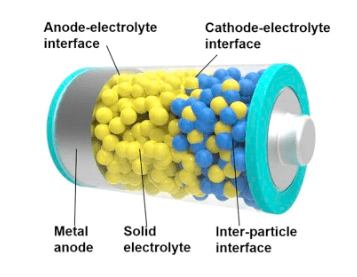
Finding a better battery electrolyte additive is a search problem over a space too large to enumerate and too expensive to sample: every candidate you want to test costs weeks of bench time. So the useful thing to build is not a better predictor, it is a loop that proposes, scores, and justifies candidates before anyone picks up a pipette.
BatteryGen is that loop. A conditional VAE trained on 7.1 million molecules generates candidates in SELFIES, which was chosen over SMILES specifically because essentially every decoded SELFIES string is a chemically valid molecule by construction. A paired ExtraTrees model predicts Coulombic efficiency. A multi-LLM stage then reasons over a retrieval-augmented literature base to argue for or against each finalist and score how novel it actually is against published work.
The whole thing trained in 16 hours on a single RTX 3060, which took several tuning rounds to get right. It ships as a pip-installable package with CI that fails the build on regression, and one config block retargets it from zinc to lithium, sodium, or potassium without touching code.
What it does
- 42M-parameter conditional VAE trained on 7,116,053 molecules curated from five public chemistry databases, reaching 1.000 validity, 0.998 uniqueness, and 0.995 novelty across 5,000 samples.
- Paired prediction model on 575 zinc additives using molecular fingerprinting, RFE-CV selection, Optuna tuning, and scaffold-grouped cross-validation, reaching R² 0.82 on Coulombic efficiency.
- Retrieval-augmented literature base with chunking, embeddings, and semantic search grounding every candidate rationale in cited passages.
- Four model roles routed across Azure AI Foundry behind one interface, with JSON-schema output, retry-on-malformed handling, and a dependency-free keyword fallback so the pipeline never hard-fails without API keys.
- Top additive NCNCc1ccccn1 advanced to experimental validation with a PhD collaborator, cycling in aqueous zinc-ion cells with ¹H NMR confirmation.
Built with
- PyTorch
- Conditional VAE
- SELFIES
- RDKit
- xTB
- XGBoost
- Optuna
- RAG